How Many Cells in a Solar Panel? 60 vs 72 vs 144
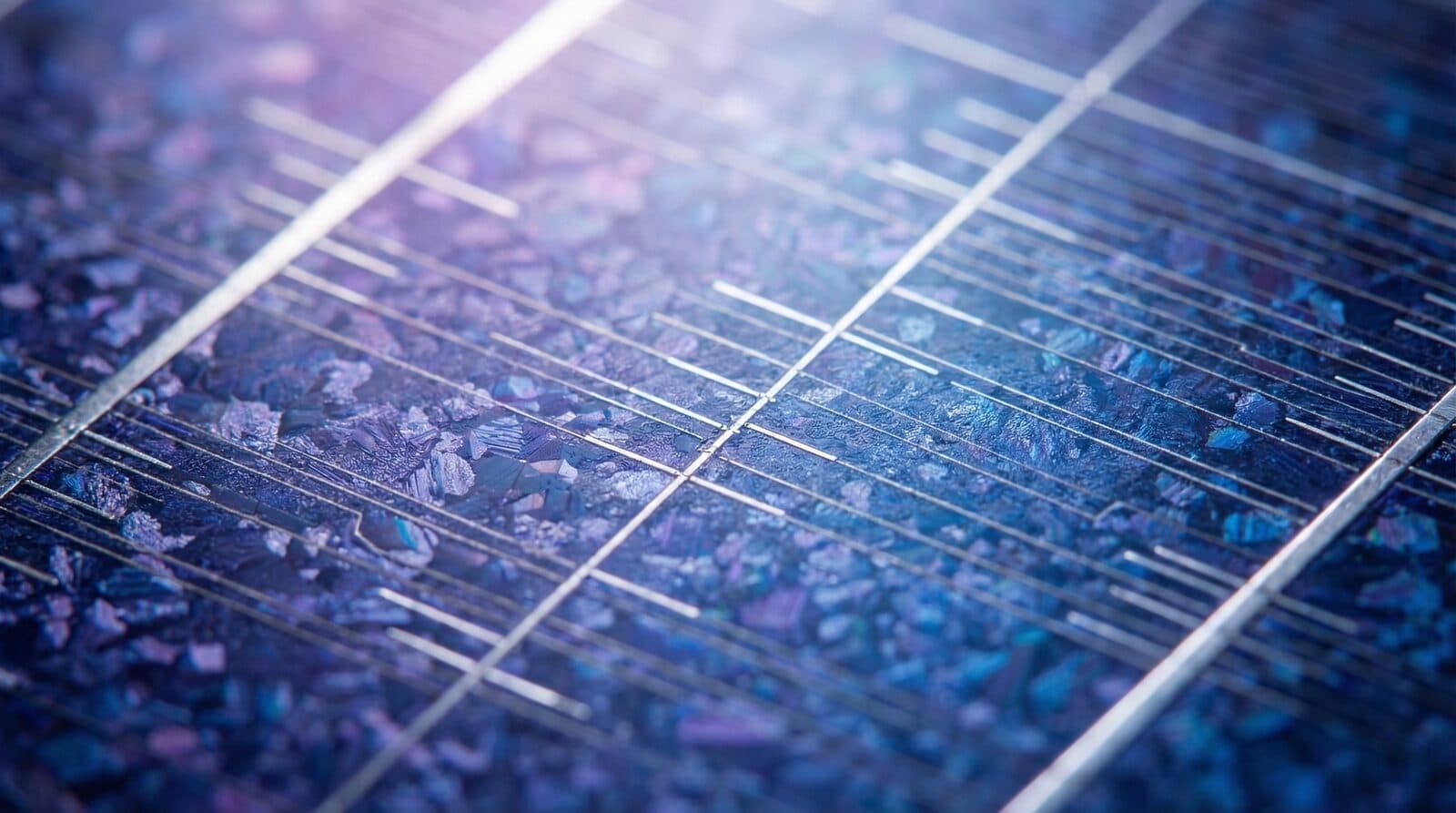
What is a solar cell and why does cell count matter?
A solar cell is the smallest electricity-generating unit inside a panel. Each cell is a thin wafer of silicon that converts sunlight into a small amount of direct current — typically 0.5–0.7 volts. A solar panel is simply many cells wired together to produce a useful voltage and current.
The number of cells in a panel directly determines its voltage, physical size, and what types of systems it can work with. Choosing the wrong cell count can mean your panels don't match your inverter, don't fit on your roof, or cost more than they should. Understanding cell count is one of the simplest ways to narrow down the right panel for your project.
Cell count ≠ power output
Common solar panel cell configurations
Solar panels come in a wide range of cell counts, from compact 36-cell modules for off-grid use to large 144-cell panels for commercial installations. Here are the configurations you'll find on the market today:
| Cells | Cell type | Power range | Typical use |
|---|---|---|---|
| 36 | Full cell | 50–160 W | RV, boats, camping, portable |
| 54 | Full cell | 200–280 W | Small rooftop, limited space |
| 60 | Full cell (legacy) | 280–370 W | Residential rooftop |
| 72 | Full cell (legacy) | 350–450 W | Commercial, ground mount |
| 108 | Half-cut | 400–450 W | Residential, compact format |
| 120 | Half-cut | 370–420 W | Residential rooftop |
| 132 | Half-cut | 410–460 W | Residential / small commercial |
| 144 | Half-cut | 520–620 W | Commercial, utility, ground mount |
The industry has shifted decisively toward half-cut cells. In 2026, the majority of new panels sold use 108, 120, 132, or 144 half-cut cells. Traditional full-cell 60 and 72-cell panels are still available but are being phased out of most product lines.
Half-cut cell technology: why cell counts doubled
In the mid-2010s, manufacturers started cutting each solar cell in half using a laser. A 60-cell panel became a 120-cell panel. A 72-cell panel became a 144-cell panel. The physical size of the panel stayed almost the same — the cells were just smaller and more numerous.
This wasn't just a marketing trick. Cutting cells in half reduces the current flowing through each cell by 50%, which means significantly lower resistive (I²R) losses. The panel is also split into two independent halves electrically, so if one half is shaded, the other half continues producing power normally.
Key benefits of half-cut cells
- Lower resistive losses — halving the current reduces I²R power loss by up to 75%
- Better shade tolerance — the panel operates as two independent sub-panels
- Higher reliability — lower current means less stress on solder joints and interconnects
- Improved hot-spot resistance — smaller cells dissipate heat more evenly
Same voltage, better performance
How cell count affects voltage
Each silicon solar cell produces approximately 0.5–0.7 volts at open circuit (Voc), depending on the cell technology. Since cells within a string are wired in series, the panel's total voltage equals the number of series-connected cells multiplied by the voltage per cell.
Panel open-circuit voltage
Voc ≈ N_cells_in_series × 0.6 V (typical monocrystalline)For half-cut panels, remember: the cells are split into two parallel groups. A 120 half-cut panel has 60 cells in series per group — the same series count as a traditional 60-cell panel. Here are typical voltage ranges:
| Cells | Typical Voc | Typical Vmpp |
|---|---|---|
| 60 | ~37 V | ~31 V |
| 72 | ~45 V | ~38 V |
| 108 | ~37 V | ~31 V |
| 120 | ~37 V | ~31 V |
| 132 | ~38 V | ~33 V |
| 144 | ~45 V | ~38 V |
Notice that 60-cell and 120-cell panels have the same voltage, and 72-cell and 144-cell panels have the same voltage. This is because half-cut technology doubles the cell count but keeps the series cell count the same. The 108-cell panel has 54 cells in series (same as a 54-cell full panel), giving it the same voltage as a 60-cell panel. The 132-cell panel has 66 cells in series, producing a voltage between the 60-cell and 72-cell configurations.
How cell count affects power and current
A panel's power output (watts) equals voltage multiplied by current. More cells in series means higher voltage. More cells in parallel (or larger cells) means higher current. But the total power is primarily determined by cell efficiency and total cell area — not just the count.
Half-cut cells improve real-world power output even though the rated (STC) power may be similar. The key is that halving the current reduces resistive losses, which are proportional to current squared:
Resistive power loss
P_loss = I² × R → half the current = 1/4 the loss per cellIn practice, a 120 half-cut panel typically produces 2–3% more energy annually than an equivalent 60 full-cell panel with the same STC rating. This difference adds up over 25 years. Additionally, half-cut panels perform significantly better under partial shading — a common real-world condition that STC lab ratings don't capture.
Cell count and inverter compatibility
This is where cell count has the biggest practical impact on your solar installation. Your inverter has a voltage window — called the MPPT range — where it can efficiently convert DC power from your panels into AC. If your string voltage falls outside this range, you lose production or risk equipment damage.
Higher-voltage panels (72-cell / 144-cell, ~45V Voc) mean fewer panels per string to reach the inverter's MPPT minimum, but you also hit the maximum DC voltage limit sooner. Lower-voltage panels (60-cell / 120-cell, ~37V Voc) give you more flexibility with string length but may require more panels to reach the MPPT minimum.
Don't forget temperature
Check your panel-inverter compatibility
Enter your panel and inverter specs into our free calculator. It automatically adjusts voltage for temperature and checks all safety limits.
Full comparison: 60 vs 72 vs 120 vs 144 cells
Here's a side-by-side comparison of the four most common cell configurations on the market in 2026:
| Specification | 60-cell | 72-cell | 120 half-cut | 144 half-cut |
|---|---|---|---|---|
| Cell count | 60 | 72 | 120 | 144 |
| Power range | 280–370 W | 350–450 W | 370–420 W | 520–620 W |
| Typical Voc | ~37 V | ~45 V | ~37 V | ~45 V |
| Dimensions | 1650 × 990 mm | 2000 × 990 mm | 1720 × 1130 mm | 2280 × 1130 mm |
| Weight | 18–20 kg | 22–25 kg | 21–23 kg | 28–32 kg |
| Half-cut? | No | No | Yes | Yes |
| Best for | Residential roof | Commercial / ground | Residential roof | Commercial / utility |
The modern residential standard is 120 or 132 half-cut cells. For commercial and utility-scale projects, 144 half-cut cells dominate. Full-cell 60 and 72-cell panels are legacy products — still functional, but increasingly rare in new installations.
Which cell count should you choose?
The right cell count depends on your installation type, available space, and inverter. Here's a quick decision guide:
Residential rooftop
Choose 120 or 132 half-cut cells. These panels balance power output, physical size, and weight for typical residential roofs. A 120-cell panel (~400 W) fits most standard rooftop layouts without special mounting. If your roof is large enough, 132-cell panels (~530 W) give you more power per panel, reducing the total number you need.
Commercial or utility-scale
Choose 144 half-cut cells. Larger panels (550–620 W) reduce the number of mounting points, wiring connections, and installation labor per kilowatt. The higher per-panel voltage also means fewer strings for the same total power.
Off-grid, RV, or portable
Choose 36 or 54-cell panels. These produce 12V or 24V nominal voltage, which is compatible with battery charge controllers used in off-grid, marine, and mobile applications. Their smaller size makes them easy to mount on roofs of vans, boats, or portable frames.
Ground mount with plenty of space
Choose 132 or 144 half-cut cells. When roof constraints don't apply, larger panels give you the best watts-per-dollar ratio and lowest installation cost per kilowatt. These panels are designed for ground-mounted racking systems.
Match your inverter first
Cell count and string sizing: a worked example
Let's see how cell count affects string sizing with a real scenario. Suppose your inverter has an MPPT range of 200–800V and a maximum DC voltage of 1000V. You live in a climate where minimum winter temperature is −20°C.
String Voc at cold temperature
V_string_cold = N_panels × Voc × (1 + (TcVoc / 100) × (T_min − 25))With a 120 half-cut panel (Voc = 37.5V, TcVoc = −0.27%/°C): each panel produces 42.1V at −20°C. You can fit up to 23 panels per string before exceeding 1000V (23 × 42.1 = 968V). MPPT minimum of 200V requires at least 5 panels (5 × 42.1 = 210V).
With a 144 half-cut panel (Voc = 45.2V, TcVoc = −0.27%/°C): each panel produces 50.7V at −20°C. Maximum is 19 panels per string (19 × 50.7 = 963V). MPPT minimum requires at least 4 panels (4 × 50.7 = 203V). Higher voltage per panel means fewer panels per string — which is more convenient for commercial installations but leaves less room for adjustment on residential roofs.
Calculate your string sizing
Don't do this math by hand — our calculator runs all 7 compatibility checks including temperature-adjusted voltage, MPPT range, and current limits.
Frequently Asked Questions
Does more cells mean more power?
Not directly. Cell count determines voltage, not power. Power depends on cell efficiency, wafer size, and technology. A 120-cell panel with high-efficiency TOPCon cells can outperform a 144-cell panel with older PERC cells. Always compare wattage (W), not cell count, when evaluating power output.
Are 144-cell panels better than 120-cell?
They're not better or worse — they serve different purposes. 144-cell panels produce higher voltage (~45V vs ~37V), have higher wattage (520–620W vs 370–420W), and are physically larger. They're ideal for commercial and ground-mount installations. For a residential roof, 120-cell panels are often the better choice due to size, weight, and handling considerations.
Can I mix panels with different cell counts in the same string?
It's strongly discouraged. Panels in the same string should be identical — same model, same wattage, same cell count. Mixing different panels causes current mismatch, which reduces the entire string's output to the weakest panel. If you must use different panels, connect them to separate MPPT inputs on your inverter.
What about 210 mm wafer panels?
Wafer size (156 mm, 166 mm, 182 mm, 210 mm) is separate from cell count. Larger wafers mean each cell produces more current, resulting in higher panel wattage without adding more cells. Most modern high-power panels (550W+) combine 210 mm wafers with 132 or 144 half-cut cells for maximum output.
What's the difference between half-cut and full cells?
Half-cut cells are literally full cells cut in half with a laser. The panel is redesigned so the top and bottom halves operate independently. Benefits include lower resistive losses (up to 75% less), better shade performance, and improved reliability. There are no real drawbacks — half-cut technology is strictly superior, which is why it has become the industry standard.
Does cell count affect the panel warranty?
Cell count itself does not directly affect warranty terms. Most manufacturers offer 25–30 year performance warranties regardless of cell count. However, half-cut cell panels (120, 132, 144 cells) tend to have lower degradation rates than full-cell panels due to reduced thermal stress, so they're more likely to exceed their warranty guarantees.


Discussion
Sign in to join the discussion
We require a quick sign-in to keep this thread free of spam.
No comments yet. Be the first to share your experience.