Will your solar panels and inverter work together?Find out in 30 seconds.
Pick a panel and an inverter from 7,156 verified models. Solar Stack recomputes voltage, current and power at your coldest and hottest temperatures, runs eleven checks, and tells you what to change.
Type any part of the name, even «deye 8k» or on the wrong keyboard layout. Not sure about the string yet? Leave 8 and adjust on the result page.
Or start from what you already have
Free, no registration requiredSpecs from manufacturer datasheetsBased on IEC 62548 & NEC 690.7
Why temperature decides the verdict
A real pair people check every week. The inverter's limits never move; the string's voltage moves with the weather. Set your coldest night and hottest day, change the string, and watch the verdict.
LONGi LR8-66HGD-615M615 W · Voc 48.58 V · -0.23 %/°C
Deye SUN-8K-SG05LP1-EU-AM2-P8 kW · ≤ 500 V · MPPT 150–425 V
Panels in the string
Coldest night of the year:-10 °C
-35 °C+10 °C
Hottest day of the year:+35 °C
+20 °C+50 °C
Cold morning at -10 °C8 × 52.5 V = 420 V
tracking window up to 425 Vinverter input limit 500 V
Before the inverter starts, the panels sit unloaded at their highest voltage of the year. Each degree colder adds 0.9 V to this string.
Hot afternoon at +35 °C8 × 36.8 V = 295 V
tracking window from 150 V
Under load in the heat the cells run at 66 °C and the string sits at its lowest voltage of the year. Below the tracking window the inverter stops converting.
- Voltage safety limit420 V / 500 V
- Tracking range (cold weather)420 V / 425 V
- Tracking range (hot weather)295 V / 150 V
+ The full result also checks currents, string fuses, input count, PV power and the DC/AC ratio.
Safe: this string stays inside the tracking window down to -15 °C and under the hard limit at any temperature you will ever see. One more panel changes the verdict, try it.
Start from what you have
Seven tools, one catalogue. Each answers a question people ask before they buy, wire or replace something. Every tile shows what the tool actually returns.
Panel MatcherAlready have an inverter? Find every compatible panel in our database with the optimal string configuration calculated automatically.Planning
Example: Deye SUN-8K-SG05LP1-EU-AM2-P
- JA Solar JAM54D40-460/LB2 × 8 · 7.4 kWfits
- Trina Solar TSM-NEG9R.28-4652 × 7 · 6.5 kWfits
- LONGi LR8-66HGD-615M2 × 7 · 8.6 kW1 note
Inverter MatcherAlready have the panels? Pick your panel and quantity — we rank every inverter that fits with the best wiring layout.Planning
Example: 16 × JA Solar JAM54D40-460/LB (7.4 kW)
- Deye SUN-8K-SG05LP1-EU-AM2-P2 × 8fits
- Deye SUN-6K-SG05LP1-EU-AM2-P2 × 81 note
- Deye SUN-12K-SG05LP3-EU-SM22 × 81 note
Panel Replacement FinderNeed to replace a failed or discontinued panel? Find electrically compatible alternatives that match your existing string.Fixing
Example: ABi-Solar PS-P60250 (250 W)
- Voc 37.6 V, within ±2 %fits
- Isc 8.49 A, within ±10 %fits
- Temperature coefficient within ±3 %fits
Inverter CompareTwo to five inverters side by side, then every one checked against the array you plan.Choosing
| Deye | SUN-6K | SUN-8K | SUN-12K 3~ |
|---|---|---|---|
| MPPT window | 150–425 V | 150–425 V | 200–650 V |
| Max DC input | 500 V | 500 V | 800 V |
| Current / Isc per MPPT | 18 / 27 A | 32 / 48 A | 26 / 39 A |
| Max PV power | 9.6 kW | 12.8 kW | 19.2 kW |
Yield EstimatorEstimate monthly and annual energy production for your solar system based on location, orientation, and panel specs.Planning
Annual yield:4,655 kWh
Cable Size CalculatorPick your panel and route length — get the right wire cross-section with voltage drop, safe current and yearly losses checked.Installing
2.5 mm²−1.9%
4 mm²−1.2%
6 mm²−0.8%
10 mm²−0.5%
16 mm²−0.3%
Voltage drop on a 40 m run at 13.8 ARecommended: 6 mm²
The catalogue: 4,445 panels and 2,711 invertersFilter by power, efficiency, cell technology, size, weight, phases or battery port. Every spec from the datasheet, and the PDF is on the page.Choosing
Model not in the list?Send the datasheet PDF or just the model name. It is verified and added, usually within hours, and you can ask to be notified.
Add equipmentEleven checks, the way an engineer runs them
Datasheet numbers are measured at 25 °C. Roofs are not. Solar Stack recomputes every voltage and current at your extremes using the panel's own temperature coefficients, then runs each check the inverter's manual expects. A fail means the design must change; a warning means it works with a caveat you should know about.
The explanations below use a -20 °C night and a +35 °C day with cells at 66 °C.
Voltage
Voltage safety limitfail
In cold weather (-20°C), panels produce higher voltage. This total voltage must not exceed the inverter's absolute maximum — otherwise the inverter could be permanently damaged.
Panel insulation ratingfail
The total string voltage at -20°C must stay within the panel wiring's insulation class. Exceeding it risks electrical arcing.
Tracking range (cold weather)warning
On very cold mornings (-20°C), the voltage may briefly exceed the inverter's optimal tracking range. This is not dangerous — the inverter simply waits a few minutes for the panels to warm up before starting.
Tracking range (hot weather)fail
In hot weather (cell temp 66°C), panel voltage drops. If it falls below the inverter's minimum tracking voltage, the inverter cannot convert power efficiently.
Efficiency in cold weatherwarning
In cold weather (-20°C), the operating voltage ideally stays within the inverter's tracking range for the best energy conversion efficiency.
Current
Input current limitwarning
In hot weather (cell temp 66°C), panels produce more current. The total current from all parallel chains (strings) must stay within the inverter's input rating.
Short-circuit protectionfail
In hot weather (cell temp 66°C), the worst-case short-circuit current must stay within the inverter's protection rating to prevent damage.
String fuseswarning
Chains (strings) joined onto one input feed each other — a fault in one is fed by all the others at once. The panel's own fuse rating is the most that current may be allowed to reach.
String inputswarning
Each MPPT tracker has a rated number of connectors for parallel chains (strings). Beyond that count the chains have to be joined outside the inverter.
Power and topology
Max PV input powerwarning
The inverter's own limit on how much panel power it will take. Above it the surplus is simply not converted — the datasheet figure, not a rule of thumb.
DC/AC ratiowarning
The ratio of total DC panel power to inverter AC output. Values between 1.0–1.3 are optimal. Above 1.5, significant energy is lost to clipping — the inverter cannot convert all the power your panels produce.
Microinverters and optimizers
Microinverters are checked per input. SolarEdge units are checked by optimizer count and string power instead of string voltage.
Feed-in limitation (EEG 2023)
In Germany, systems up to 25 kWp without a Smart Meter must limit grid feed-in to 60% of peak capacity (EEG 2023, §9).
Numbers you can check yourself
- 4,445
- solar panels
- 2,711
- inverters
- 165
- brands
- 1,760
- datasheet PDFs to download
From the datasheet, not a shop listing
Every value is taken from the manufacturer's PDF, and that PDF is one click away on the model page. A submission stays invisible until it has been verified against it.
Independent
No manufacturer pays to be listed, ranked or recommended. The project is self-funded, and which panel or inverter the tools suggest depends only on the numbers in the datasheet.
Open method
The formulas, the standards and a worked example are public. Readers report spec errors from the model page, and each one is checked against the original datasheet.
What people are checking this month
Picked most often by visitors in the calculator. Tap one to start a check with it preselected.
Inverters
Browse inverters by manufacturer
Deye483GoodWe217Growatt161Must160SolaX Power143Solis142FoxESS89Sofar Solar80Fronius78Sungrow78Luxpower69Huawei63
All 83 brands
Solplanet62Hoymiles57Steca55SolarEdge55Afore48Sigenergy41PowMr39SMA37SAJ35Felicity Solar31WEG31Anern25EcoFlow25Axioma Energy21Victron Energy19Inverex19KOSTAL17ECGSOLAX17Jsdsolar16LogicPower16Ingeteam15AlphaESS14Enphase14Easun Power13iStore12Waaree Energies11Anenji11Selfa10Daxtromn10FENECON8Aruna8EPEVER8myenergi8Aiko Solar7SMARTWATT7iPandee7KACO new energy6POM Power6TommaTech6Marstek6TANYANO6Redback Technologies6Datouboss5SOSEN5Solinteg5SRNE5Megarevo5Sandisolar4GivEnergy4LVTOPSUN4SOSSEN4EG44Canadian Solar4enerQi3MakeSkyBlue3AXITEC3Voltronic Power3Anker SOLIX3Sol-Ark2Solnator2APsystems2Getemete2MasterPower2SILA2LG Electronics Inc.1Sunway1Aninerel1Generac1WattCycle1Tesla1MPP Solar1
Browse solar panels by manufacturer
LONGi313Luxor Solar304DAH Solar297Perlight Solar209Aiko Solar182Trina Solar182JinkoSolar176Horay Solar173DMEGC164RECOM149JA Solar141TommaTech129
All 90 brands
Seraphim126S-Energy117Risen108Canadian Solar107Sun Earth96Yingli Solar96TCL Zhonghuan95Ulica Solar94München Solar76Phono Solar71Waaree Energies67Maysun Solar66GCL58Suntech55Tongwei55Astronergy53UKSOL51LogicPower40Sunpro Power35Leapton Energy34Huasun31AXITEC29Qcells27DAS Solar27Solar Fabrik26AE Solar20aleo solar20Jolywood19Solarwatt18Jetion Solar18Hanersun18WINAICO18Bluesun Solar15Sunway15Heckert Solar15Solyco Solar14United Energy11Greensun Solar11Inter Energy10REC Group10Solet9DAHAI SOLAR7Amerisolar7Maxeon6Q-SUN Solar6SUNPLUS6AEG6SpolarPV6HY Solar5Eco Green Energy5HD Hyundai Energy Solutions5Luxen Solar5Sunergy5Rosen Solar5FuturaSun5Akcome5Sungi Solar5Sonnex5SolarSpace5Sunova Solar5SunEvo Solar4Osda Solar4Schüco4Bauer Solar3Viessmann3Sonnenstromfabrik3Peimar3ABi-Solar3LEDVANCE3Trienergia2Tensite2DUONERGY1Kopp1Hevel1RSI Homes1Isola New Energy1SoliTek1EcoFlow1
Guides for the decisions before the purchase
All guides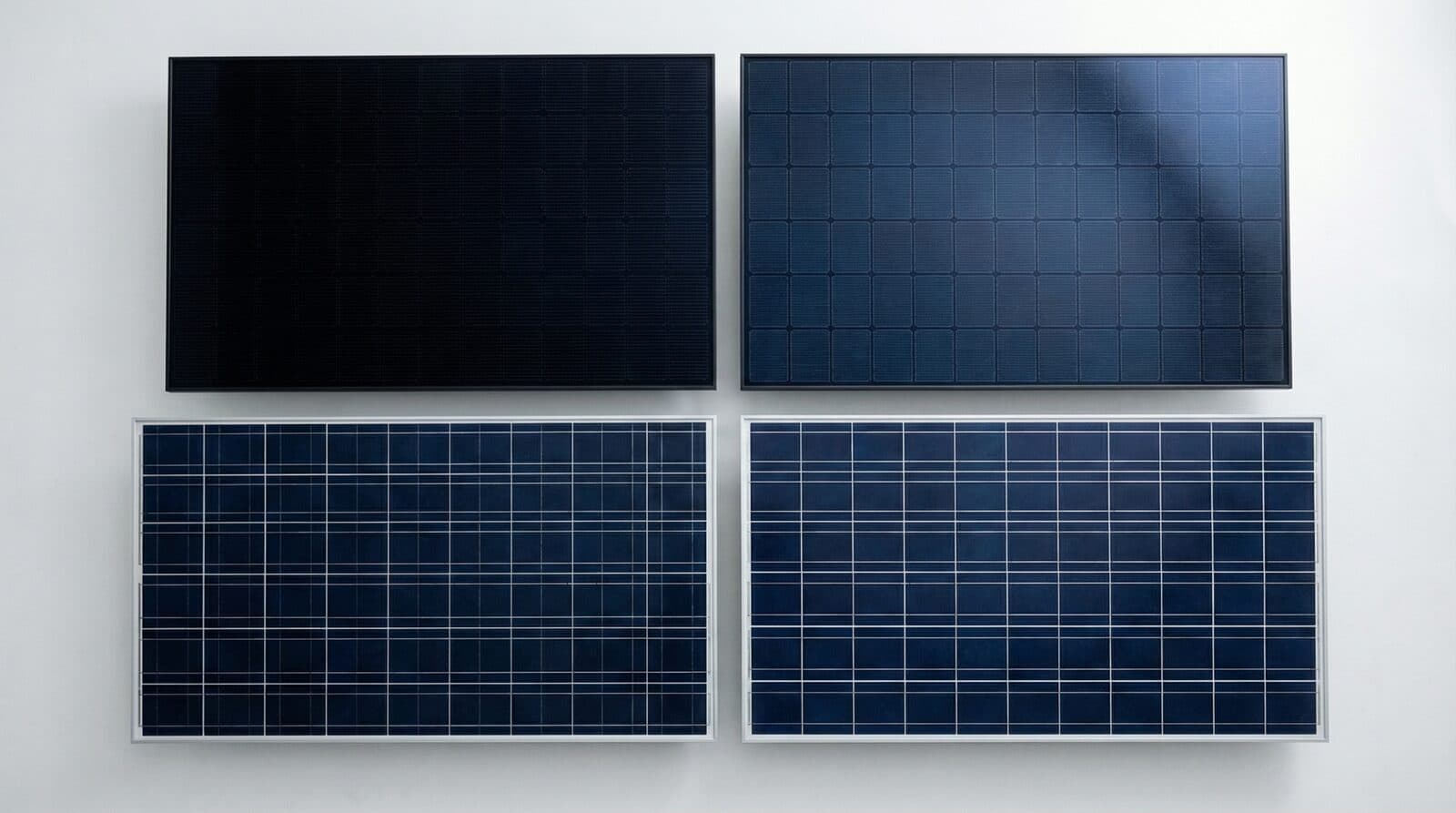 Top 10 Most Efficient Solar Panels in the World 2026The top 10 most efficient solar panels in the world in 2026, plus five runners-up: HIBC, ABC, TOPCon and HJT. Real datasheets, heat losses, warranties, $/W.Most read19 min
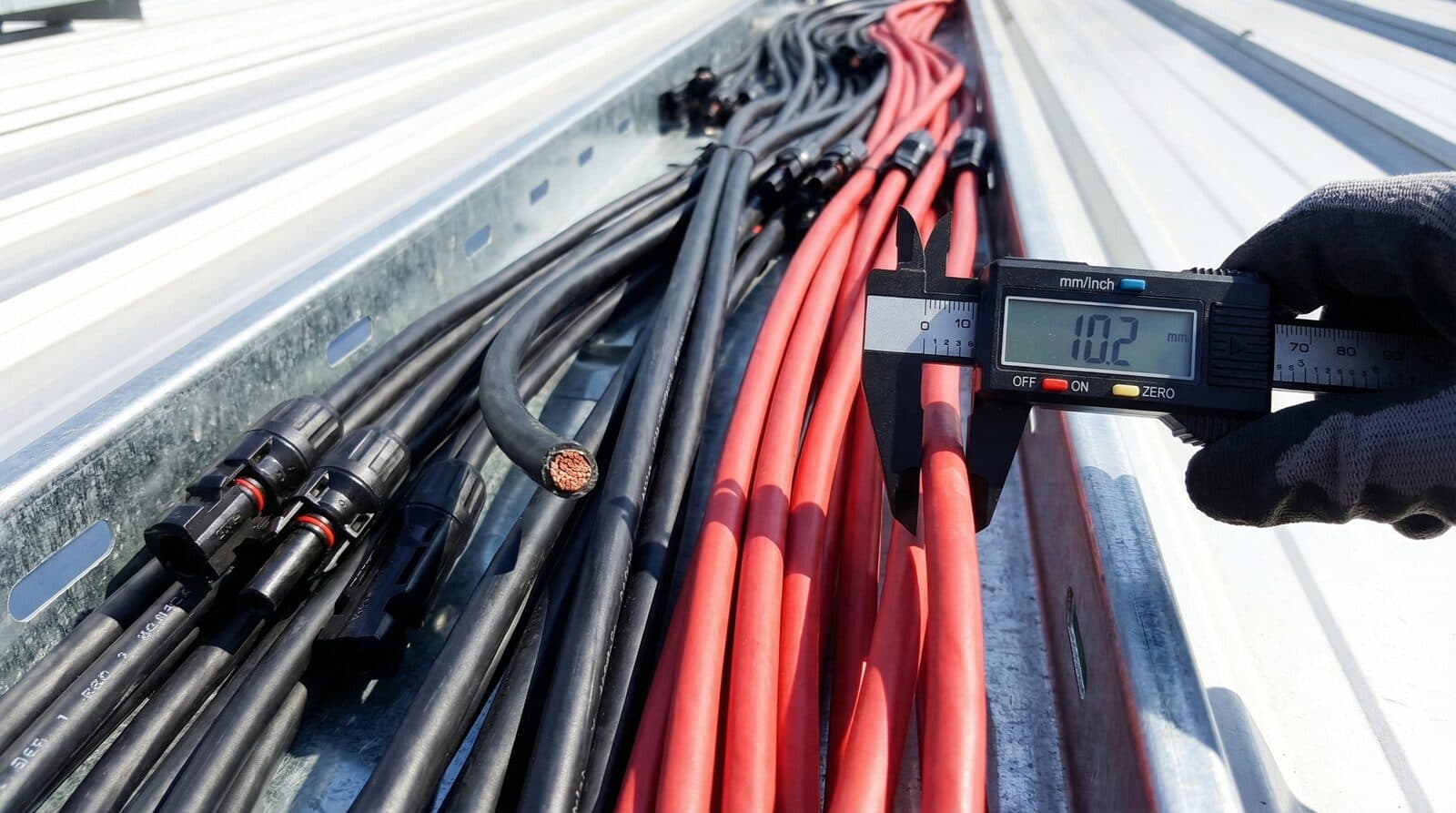 Solar Cable Sizing Chart: 2.5–10 mm² + Voltage DropSizing chart for 2.5, 4, 6 and 10 mm² solar cable: pick the gauge by current, calculate voltage drop, avoid AWG-to-metric mistakes. With worked examples.Installing12 min
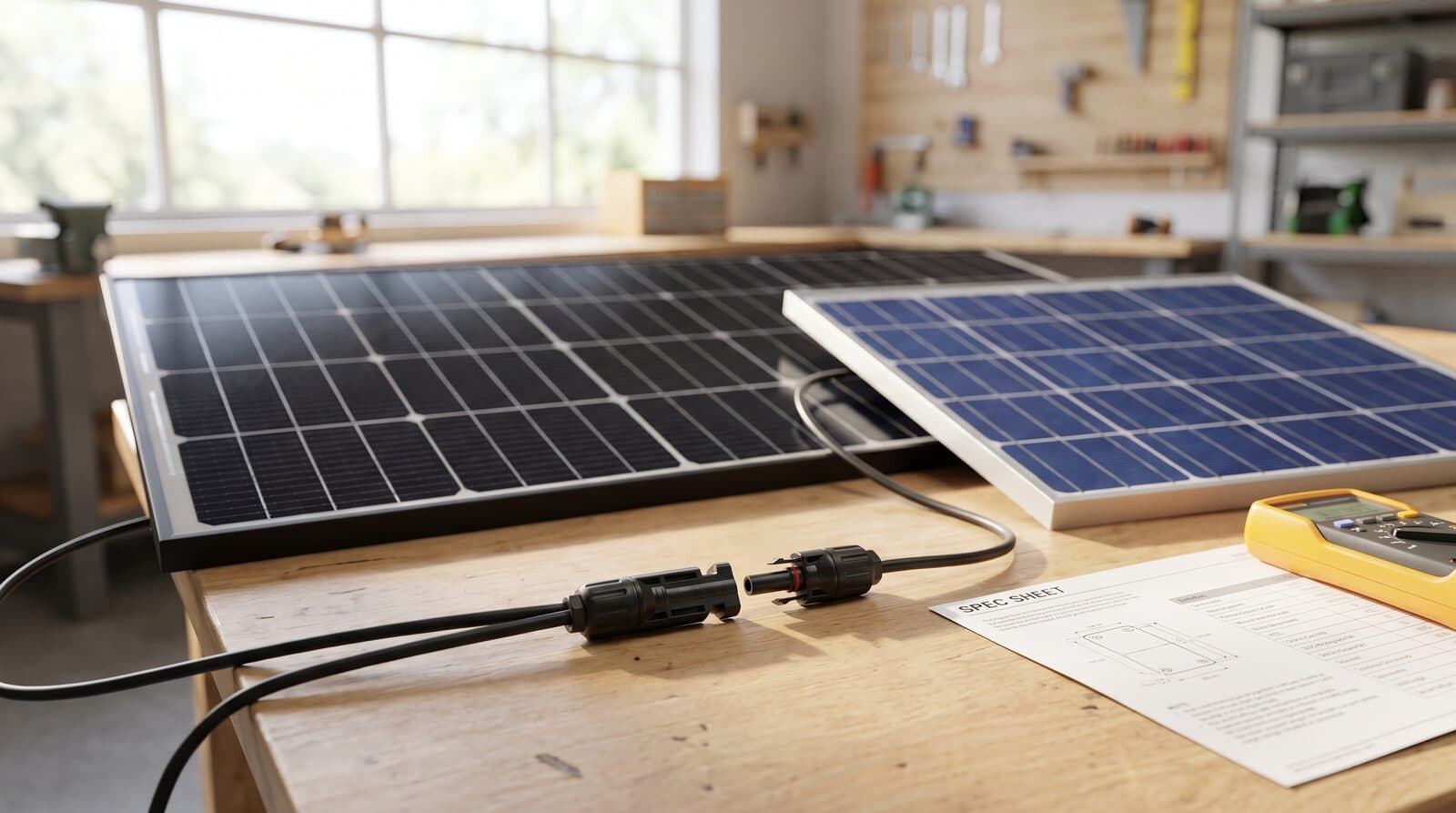 Can You Mix Different Solar Panels? Rules & LossesMixing solar panels of different wattage, brand, or age? Learn the series and parallel rules, how much power you lose, and when it's safe to do it.Planning13 min
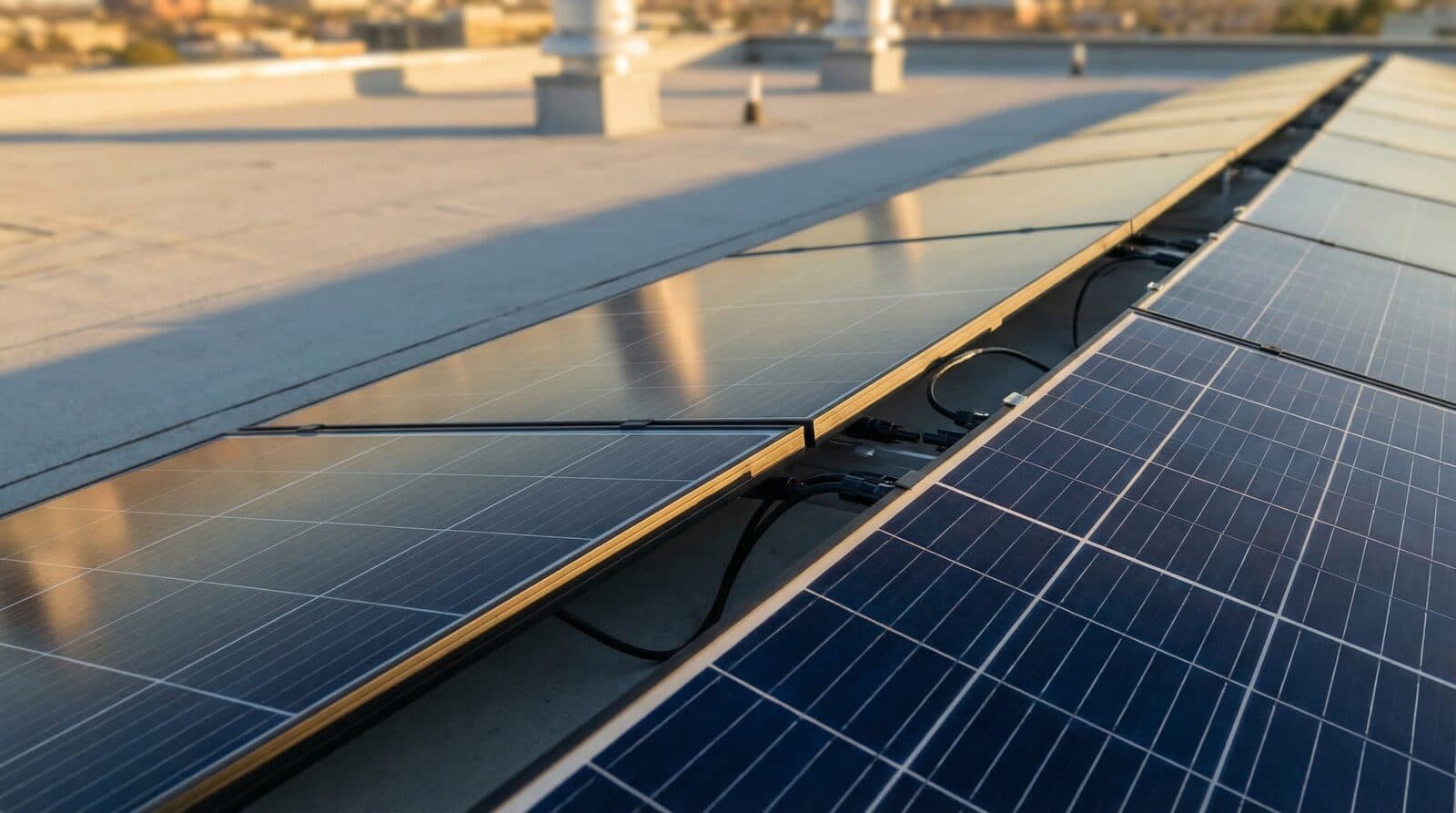 Solar Panel String Sizing: A Complete Beginner's GuideLearn how to calculate the right number of solar panels per string. Covers voltage limits, temperature effects, MPPT range, and common mistakes.Start here16 min
Frequently asked questions
What happens if string voltage exceeds the inverter limit?
If the open-circuit voltage of your panel string exceeds the inverter's maximum DC input voltage, the inverter can be permanently damaged. This is most dangerous in cold weather when panel voltage is highest. Our calculator checks this at your coldest expected temperature.
How does temperature affect solar panel voltage?
Solar panels produce higher voltage in cold weather and lower voltage in hot weather. The rate of change is specified by the temperature coefficient of Voc (typically around -0.27%/°C). At -20°C, a panel rated at 40V can reach over 45V. This is why temperature-adjusted calculations are essential for safety.
How many panels can I connect in series?
The maximum number depends on your inverter's voltage limits and your local temperatures. You need the string voltage to stay below the inverter's max DC voltage in cold weather, and above the MPPT minimum voltage in hot weather. Our calculator finds the safe range for your specific equipment.
Which tool should I use if I already own the panels?
Use the Inverter Matcher — pick the panel you have, set how many, and we rank every inverter in our database by how well it fits with the best wiring layout pre-calculated.
Do I need to check compatibility if I buy a kit?
Pre-configured kits from reputable manufacturers are usually designed to be compatible. However, if you're mixing brands, changing the number of panels, or installing in a climate with extreme temperatures, a compatibility check is strongly recommended.
Can I mix different solar panels in one string?
Mixing different panels in a series string is generally not recommended. Panels with different current ratings will be limited by the weakest panel, reducing overall output. If you must mix, panels should have the same short-circuit current (Isc). Different panels can safely be connected to separate MPPT inputs on the inverter.
Your model is not in the catalogue yet?
Send the manufacturer's datasheet, or just the model name, and it is verified and added, usually within a few hours. Ask to be notified and the calculator will tell you when it is there.