Solar Panel Oversizing Guide: DC/AC Ratio Limits
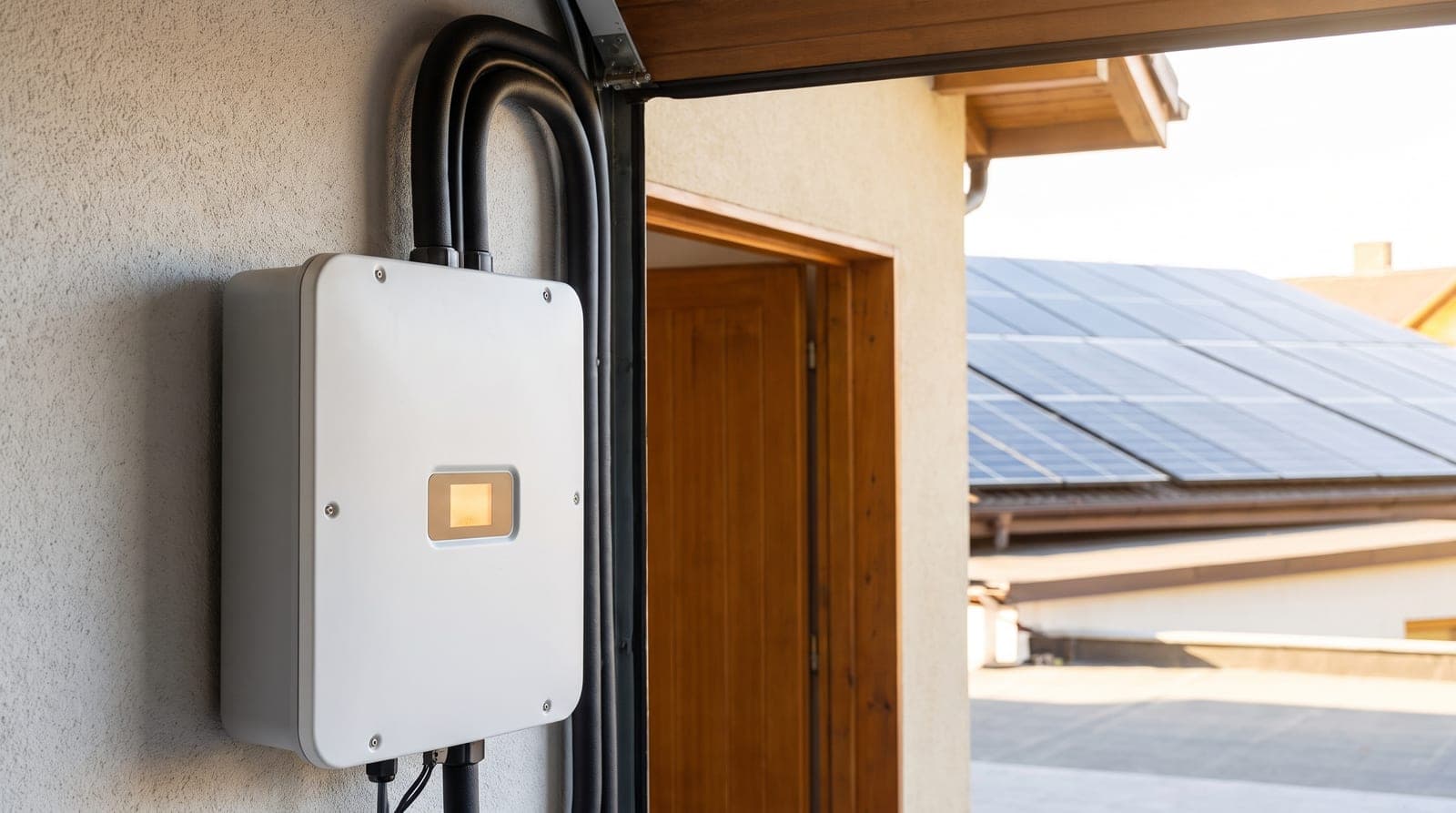
The short answer: yes, and most professionals do it
Yes, you can — and in most cases you should — install more solar panel capacity than your inverter's AC power rating. This practice is called "oversizing" or having a DC/AC ratio above 1.0. A ratio of 1.2–1.3 is standard practice worldwide and is recommended by most installers. For example, connecting 7700W of panels to a 6000W inverter (a ratio of 1.28) is perfectly normal and actually the smart way to design a system.
The reason is simple: solar panels almost never produce their full rated power in real-world conditions. Temperature, sun angle, dirt, and clouds reduce output to 80–90% of the nameplate rating for most of the day. Oversizing the panel array ensures the inverter runs at or near full capacity for more hours, capturing significantly more energy over the course of a year.
Oversizing ≠ overvoltage
Why panels rarely produce their rated power
A 550W panel produces 550W only under Standard Test Conditions: 25°C cell temperature, 1000 W/m² irradiance, and a perfectly perpendicular sun angle. In real life, cell temperatures routinely reach 50–70°C on sunny days (reducing power by 10–15%), the sun is rarely at the optimal angle, and dust or dirt on the glass further cuts output by 2–5%.
On a typical sunny day, your 550W panel actually produces 440–480W at its peak. In the morning and evening, output drops even further. The only time it might briefly reach 550W is on a cold, clear winter day around solar noon — and even then, only for minutes. This means a system designed with a 1.0 DC/AC ratio leaves your inverter underutilized for most of the day, wasting the capacity you paid for.
What is the DC/AC ratio?
The DC/AC ratio is the total nameplate (STC) power of all your panels divided by the inverter's nominal AC output power. A ratio of 1.0 means panel capacity exactly equals inverter capacity. Above 1.0 means you have more panel capacity than the inverter can output — and that extra capacity is what fills in the gaps during non-peak hours.
DC/AC ratio formula
DC/AC ratio = Total panel STC power (W) ÷ Inverter nominal AC power (W)
Example: (14 × 550W) ÷ 6000W = 7700 ÷ 6000 = 1.28
A ratio of 1.28 means your panels can theoretically produce 28% more DC power than the inverter can output as AC. In practice, this "excess" is only reached during a few peak midday hours on clear days. The rest of the time — mornings, evenings, cloudy periods — the panels produce less than the inverter's capacity, and the extra panels help fill in those gaps with real, usable energy.
The sweet spot
What is clipping and how much energy do you lose?
Clipping happens when your panels produce more DC power than the inverter can convert to AC. The inverter caps its output at its rated AC power and discards the excess. Think of it like pouring water into a cup that is already full — the cup holds what it can, and the rest overflows. The inverter operates at maximum capacity, and the surplus power is simply not converted.
The annual energy lost to clipping depends on your DC/AC ratio. At 1.1, clipping losses are negligible — roughly 0.1% of annual production. At 1.2, you lose about 1%. At 1.3, losses are 2–3%. At 1.4, they reach 5–7%, and at 1.5, about 8–12%. With a 1.28 ratio, you lose approximately 2% of annual energy to clipping, but the extra panels gain 10–15% more energy during non-peak hours. The net result: roughly 8–13% more total annual energy compared to a 1.0 ratio.
Clipping is energy loss, not damage
DC/AC ratio comparison: what each level means
The table below shows how different DC/AC ratios affect clipping losses and total annual energy production. Use it to find the right balance for your system.
| DC/AC Ratio | Annual clipping loss | Net annual energy vs 1.0 | Recommendation |
|---|---|---|---|
| 0.8 | 0% | −10% (inverter oversized) | Wasteful — overpaying for inverter capacity |
| 1.0 | ~0% | Baseline | Conservative — inverter underutilized most of the day |
| 1.2 | ~1% | +8–10% | Good — standard residential target |
| 1.3 | ~2–3% | +10–13% | Optimal — best value for most climates |
| 1.5 | ~8–12% | +5–8% | Aggressive — check manufacturer warranty limit |
Manufacturer warranty limits on oversizing
Most inverter manufacturers explicitly allow DC/AC ratios up to 1.3–1.5× without voiding the warranty. Deye, Huawei, Growatt, and SMA all publish a maximum DC input power specification in their datasheets — that is your ceiling. For the Deye SUN-6K-SG05LP1-EU used in our example, the inverter does not impose an explicit total DC power limit beyond its voltage and current constraints.
The real constraints that matter are voltage and current, not total power. An inverter does not care whether you connect 6 kW or 10 kW of panels — it only cares about three things: (1) that the string voltage stays below maxDcVoltage at all times, (2) that the string current does not exceed maxInputCurrent per MPPT, and (3) that the total short-circuit current does not exceed maxShortCircuitCurrent. If all three checks pass, the inverter simply clips any excess power safely and operates normally.
Always check voltage first
The voltage trap: more panels = higher cold-weather voltage
Here is the danger that catches DIY installers off guard: when you add more panels to increase total power, you typically add them to existing strings (series connections). More panels per string means higher voltage. And in cold weather, voltage rises even further due to the negative temperature coefficient. If the total string open-circuit voltage at your coldest expected temperature exceeds the inverter's maxDcVoltage, you risk permanent damage — regardless of how reasonable your DC/AC ratio looks on paper.
The voltage check you must not skip
Voc_cold = N_panels_per_string × Voc_stc × (1 + TcVoc/100 × (T_min − 25))
Must be < inverter maxDcVoltage (e.g., 500V for Deye)
Consider this example: adding a 9th panel to an 8-panel string of LONGi LR5-72HBD-555M (Voc = 49.8V) at −10°C gives Voc_cold = 9 × 49.8 × 1.0928 = 489.9V — dangerously close to the 500V limit. Factor in production tolerance (+3%), and the actual voltage could reach 504V, which would trip the inverter's overvoltage protection. The safe move: keep 7–8 panels per string and connect additional panels to the other MPPT input instead.
Add panels across MPPTs, not to one string
Worked example: 14 panels on a 6 kW Deye inverter
Let's verify that 14 LONGi 550W panels (7700W total) are compatible with a 6 kW Deye inverter. That is a DC/AC ratio of 1.28 — right in the optimal range. We will check voltage, MPPT range, and current at real temperature extremes.
Equipment (verified from database)
Panel: LONGi LR5-72HBD-555M (Voc=49.8V, Vmpp=41.95V, Isc=13.99A, TcVoc=−0.265%/°C, Pmax=550W). Inverter: Deye SUN-6K-SG05LP1-EU (maxDcVoltage=500V, MPPT 150–425V, maxInputCurrent=26A/MPPT, nominalAcPower=6000W, 2 MPPT × 2 strings). Configuration: 7 panels per MPPT × 2 MPPTs = 14 panels total. Climate: −10°C winter, +40°C summer.
DC/AC ratio
DC/AC = (550 × 14) ÷ 6000 = 7700 ÷ 6000 = 1.28 ✓ (within 1.0–1.5 range)Voltage check (per MPPT)
Voc_cold = 7 × 49.8 × (1 + (−0.265/100) × (−10 − 25)) = 348.6 × 1.0928 = 380.9V ✓ (< 500V, 119V headroom)Current check (per MPPT)
Isc_hot = 13.99 × 1 × (1 + (0.05/100) × (65 − 25)) = 13.99 × 1.02 = 14.27A ✓ (< 26A per MPPT)Result
All checks pass with comfortable margins. The 1.28 DC/AC ratio means roughly 2% of annual energy is clipped at midday peaks, but you gain approximately 10% more total energy compared to a 1.0 ratio (12 panels). The voltage headroom of 119V below the 500V limit is generous — you could even consider 8 panels per MPPT (Voc_cold = 435.3V, still safely below 500V) for a DC/AC ratio of 1.47, though clipping losses would increase.
Verify your DC/AC ratio
Enter your panel and inverter models — our calculator checks the DC/AC ratio and all voltage/current limits at your temperature extremes.
5 common oversizing mistakes
- Confusing power oversizing with voltage oversizing
Adding more total watts to your system is safe — the inverter just clips the excess. But adding more panels per string increases voltage, which has a hard limit. Connecting 8 kW of panels to a 6 kW inverter is fine. But putting 10 panels at 50V each on a single string gives 500V at STC — which will exceed 500V in cold weather and potentially damage the inverter.
- Exceeding a 1.5 DC/AC ratio
Above a 1.5 DC/AC ratio, clipping losses begin to outweigh the energy gains from the extra panels. You are paying for panel capacity that mostly goes to waste during peak hours. Some inverter manufacturers also set explicit maximum DC input power limits in this range, and exceeding them may affect your warranty.
- Ignoring cold-weather voltage when adding panels
"I added 2 more panels and the inverter started tripping in winter" — this is a classic mistake. Every additional panel in a series string raises the open-circuit voltage. In cold weather, that voltage climbs even higher. Always recalculate Voc at your coldest expected temperature before adding panels to an existing string.
- Assuming all MPPTs share one current limit
"My inverter handles 52A total, so I can run 30A on MPPT1" — that is not how it works. Current limits are specified per MPPT input, not as a shared pool. Each MPPT has its own maximum input current rating. Always check the per-MPPT limit on your inverter's datasheet, not the total input specification.
- Not accounting for future panel degradation
Solar panels degrade by 0.3–0.5% per year. After 10 years, your 1.28 DC/AC ratio drops to approximately 1.24. After 25 years, it falls to about 1.15. A system designed at exactly 1.0 will be producing at only 0.87 after 25 years — significantly underutilizing the inverter for most of its lifetime. Starting with a higher ratio ensures your inverter stays well-utilized as the panels age.
Find compatible panels for your inverter
Use our matcher tool to browse panels that fit your inverter's voltage and current limits.
Frequently asked questions
Can I put 8 kW of panels on a 6 kW inverter?
Yes — that gives you a DC/AC ratio of 1.33, which is within the optimal range. The inverter will clip about 2–3% of annual energy during midday peaks but will produce significantly more total energy over the year. Just make sure to verify that the string voltage stays below the inverter's maxDcVoltage at your coldest expected temperature.
Will oversizing damage my inverter?
No, as long as you stay within the voltage and current limits. Power oversizing causes clipping, which is a normal, safe operating condition the inverter is designed to handle. Voltage oversizing (too many panels per string) is a completely different situation and can cause damage. These are two separate things — always check both.
Does clipping void my inverter warranty?
Generally no. Clipping within manufacturer-specified limits (typically up to 1.3–1.5× DC/AC ratio) is expected behavior that inverters are designed for. Check your specific inverter's warranty terms for any explicit DC power limits. Major brands like Deye, Huawei, Fronius, and SMA do not penalize standard oversizing practices.
What is the maximum DC/AC ratio I should use?
A ratio of 1.3 is the sweet spot for most systems. The practical maximum is around 1.5 — above that, clipping losses start to exceed the benefit of extra panels, and you are paying for capacity that mostly goes to waste. Some jurisdictions and inverter manufacturers set explicit limits, so check local electrical regulations and your inverter's datasheet.
Why does my inverter show constant maximum output on sunny days?
Your system is clipping — and that is perfectly normal. The panels are producing more DC power than the inverter can convert to AC, so the inverter runs at its rated maximum for several hours around midday. This is expected and healthy behavior with a DC/AC ratio above 1.0. It means your system is well-sized and making the most of your inverter's capacity.
Is it better to have a bigger inverter or more panels?
More panels on a right-sized inverter usually wins. A bigger inverter costs more per watt of AC output and sits underutilized for most of the day. Extra panels on a smaller inverter cost less per watt and capture more energy during morning, evening, and cloudy periods — exactly the times when your system would otherwise be producing very little.
Can I add panels to my existing system later?
Yes, as long as your inverter has available MPPT inputs and the new configuration passes all voltage and current checks. Run the calculation with your existing panels plus the new ones before purchasing anything. Our calculator lets you test different configurations instantly to see what works.
Does panel degradation affect the DC/AC ratio over time?
Yes, it does. Panels degrade by 0.3–0.5% per year, so your DC/AC ratio slowly decreases over the system's lifetime. A system designed at 1.3 today will drop to about 1.2 after 10 years and roughly 1.1 after 25 years. This is actually a hidden benefit of oversizing — your clipping losses decrease over time while the inverter stays well-utilized throughout its life.


Discussion
Sign in to join the discussion
We require a quick sign-in to keep this thread free of spam.
No comments yet. Be the first to share your experience.