Solar Panel Wiring: Series vs Parallel Explained
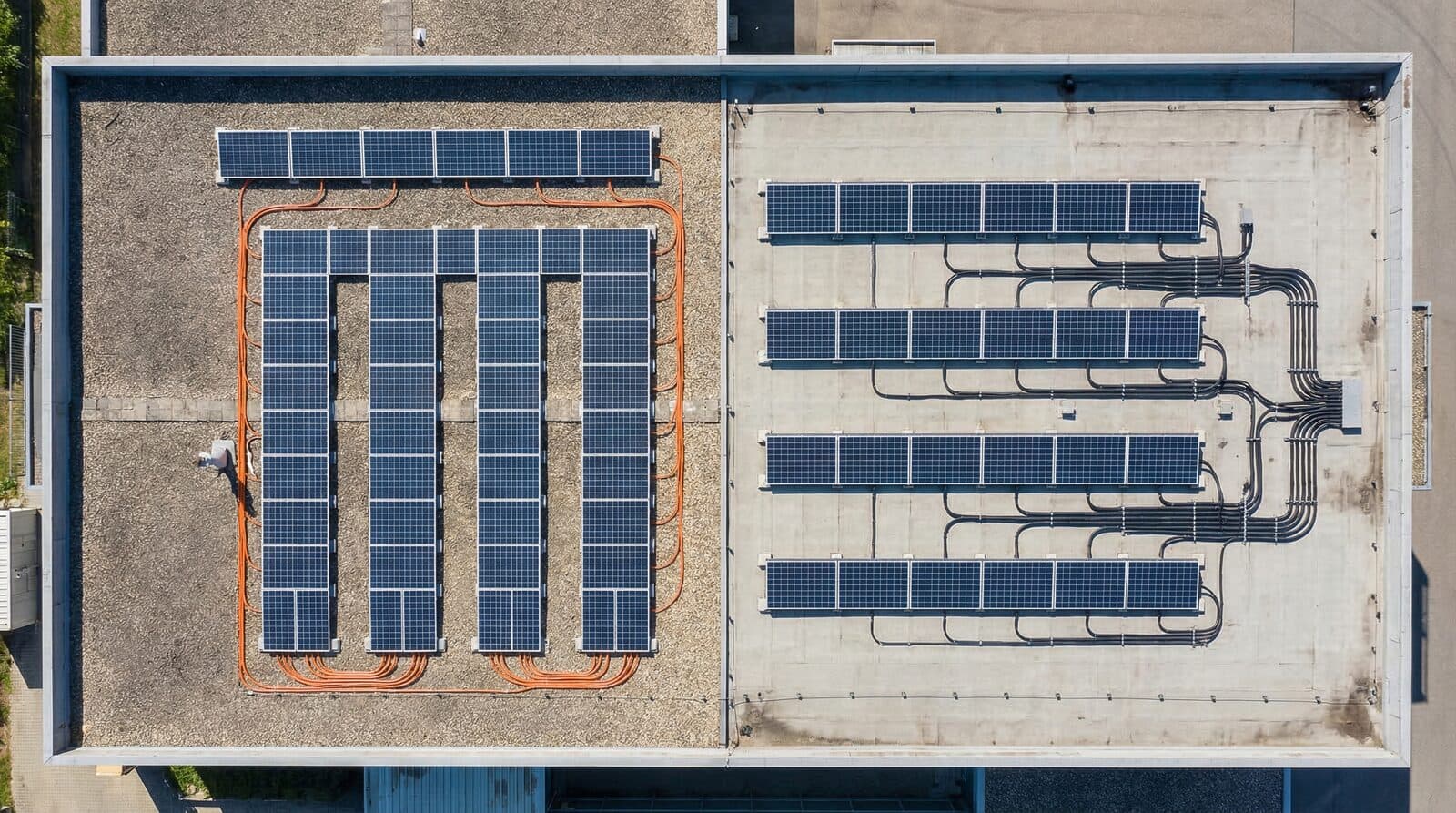
What does wiring in series vs parallel mean?
When you connect solar panels together, there are two fundamental options: series and parallel. Think of it like water pipes. Series wiring is like connecting pipes end-to-end — the pressure (voltage) builds up along the chain, but the flow rate (current) stays the same as one pipe. Parallel wiring is like running pipes side by side — the flow rate increases, but the pressure stays the same.
In practice, almost every solar installation uses both. Panels within a string are wired in series to build voltage. Multiple strings are then wired in parallel to increase current and total power. Understanding when and why to use each method is the key to a safe, efficient system.
You don't need to be an electrician
How series wiring works
When panels are wired in series, you connect the positive terminal of one panel to the negative terminal of the next. The result: voltages add up, current stays the same as a single panel. This is how you build a "string" — and the term comes from this chain-like arrangement.
String voltage (series)
V_string = N_panels × V_panel (e.g., 10 × 49.6V = 496V)Series wiring is the standard approach for string inverters, which need a minimum voltage to start operating (typically 150-200V). By connecting 8-20 panels in series, you create a string voltage high enough for the inverter's MPPT input range.
The downside: if one panel in a series string is shaded or underperforming, it drags down the entire string. The weakest link limits the current flow through all panels. This is why bypass diodes exist in modern panels — they let current flow around a shaded cell, limiting the damage but not eliminating it entirely.
How parallel wiring works
In a parallel connection, you connect all positive terminals together and all negative terminals together. The result: currents add up, voltage stays the same as a single string. Parallel wiring is used to combine multiple strings into a single inverter input, or to connect panels directly in low-voltage systems (12V/24V/48V).
Total current (parallel)
I_total = N_strings × I_string (e.g., 3 strings × 14.0A = 42.0A)The advantage of parallel wiring: if one string is shaded or underperforming, the other strings continue producing at full capacity. Each string operates independently. This makes parallel configurations more shade-tolerant than a single long string.
The tradeoff: parallel wiring increases current, which means you need thicker wires to handle the higher amperage safely. Higher current also means you must check your inverter's maximum input current and short-circuit current limits per MPPT input.
Series-parallel hybrid: the real-world standard
Most residential and commercial solar installations don't use pure series or pure parallel — they use both. Panels within each string are wired in series (to build voltage), and then two or more strings are wired in parallel (to increase total power). This hybrid approach gives you the best of both worlds: enough voltage for the inverter's MPPT range, and enough current for the power output you need.
Designing a series-parallel system means answering two questions: how many panels per string (series), and how many strings in parallel per MPPT input? The first is determined by voltage limits, the second by current limits.
String voltage (determines panels per string)
V_string = N_panels × V_oc × (1 + (TC_Voc / 100) × (T_cold - 25)) must be ≤ inverter max DC voltageTotal current (determines strings per MPPT)
I_total = N_strings × I_sc × (1 + (TC_Isc / 100) × (T_hot - 25)) must be ≤ inverter max input currentFor example, with a Huawei SUN2000-10KTL-M1 (max DC 1100V, MPPT 140–980V, max input current 11A per MPPT) and Canadian Solar CS6W-550MS panels: you could wire 12 panels per string (string Voc at −15°C ≈ 660V, well within 1100V), and run 1 string per MPPT (single string Isc at hot ≈ 14.3A — this exceeds the 11A input limit by about 30%, meaning the inverter will clip current significantly during peak sun).
Series vs parallel: side-by-side comparison
Here's a quick comparison to help you understand the key differences:
| Feature | Series (string) | Parallel |
|---|---|---|
| Voltage | Adds up (N × V_panel) | Same as one string |
| Current | Same as one panel | Adds up (N × I_string) |
| Shading tolerance | Poor — one shaded panel affects all | Good — each string independent |
| Wire size needed | Thinner (lower current) | Thicker (higher current) |
| Main safety risk | Overvoltage in cold weather | Overcurrent without fuses |
| Wiring complexity | Simple — daisy chain | Needs combiner box or branch connectors |
| Best for | String inverters, high-voltage systems | Low-voltage (12/24/48V), shade-prone sites |
How to choose: a simple decision guide
The right wiring method depends on your inverter type, shading situation, and system size. Here are three common scenarios:
- Rooftop with string inverter (most common)
Wire panels in series to form strings, then connect 1-2 strings per MPPT input. This is the standard residential setup. Start by finding the maximum panels per string using your inverter's voltage limits and your coldest temperature, then decide how many strings based on current limits.
- Shaded ground mount with multiple orientations
Use an inverter with multiple MPPT inputs. Put panels facing the same direction on the same MPPT tracker, each with its own string. Different orientations go on different MPPTs. This way, shade on one group doesn't affect the others.
- Small off-grid system (12V/24V/48V battery)
For low-voltage battery charging with a PWM controller, wire panels in parallel to keep voltage at the battery level. With an MPPT controller, you can wire in series for higher voltage — the controller steps it down to battery voltage more efficiently.
When in doubt, check your inverter specs first
Why cold weather changes everything
Here's the part that catches most beginners off guard: solar panels produce higher voltage in cold weather. The physics of silicon means that when temperature drops below the standard test temperature of 25°C, the open-circuit voltage (Voc) increases. For a typical panel with a temperature coefficient of -0.27%/°C, a drop to -15°C means a voltage increase of about 10.8%. In a series string, this increase multiplies by the number of panels.
Cold-weather string voltage
V_string_cold = N × Voc × (1 + (TC_Voc/100) × (T_min - 25)) e.g., 12 × 49.6 × 1.108 = 659.5VThis is the single most important safety check for series wiring. If your cold-weather string Voc exceeds the inverter's maximum DC input voltage, you risk permanent damage. This happens most often on cold, sunny winter mornings when panels are at their coldest and the sun hits them for the first time after a freezing night.
This is the #1 cause of inverter damage in DIY installations
Worked example: 8 panels on a Huawei inverter
Let's walk through a complete series-parallel design using real equipment from our database:
Equipment
Panel: Canadian Solar CS6W-550MS (Voc=49.6V, Vmpp=41.7V, Isc=14.0A, TC Voc=−0.27%/°C, TC Isc=+0.05%/°C). Inverter: Huawei SUN2000-10KTL-M1 (Max DC=1100V, MPPT range 140–980V, max input current=11A per MPPT, max Isc=15A, 2 MPPT × 1 string). Configuration: 2 strings × 4 panels (8 total), 1 string per MPPT, rack roof mount. Location: Central Europe, −10°C to +35°C.
Calculations
String voltage (cold): 4 × 49.6 × (1 + (−0.27/100) × (−10 − 25)) = 198.4 × 1.0945 = 217.1VString voltage (hot): 4 × 41.7 × (1 + (−0.27/100) × (65 − 25)) = 166.8 × 0.892 = 148.8VString current (hot): 1 × 14.0 × (1 + (0.05/100) × (65 − 25)) = 14.0 × 1.02 = 14.28ACell temp (hot): 35°C ambient + 30°C rack offset = 65°CResults
Cold Voc 217.1V < 1100V max DC ✓. Cold Voc 217.1V < 980V MPPT max ✓. Hot Vmpp 148.8V > 140V MPPT min ✓ (just barely — this string is at the lower edge of the MPPT range in summer). Hot current 14.28A > 11A max input ⚠ (significant clipping — the inverter will limit current to 11A, losing about 23% of peak current). Hot Isc 14.28A < 15A max short-circuit ✓. This design works but has notable current clipping and tight voltage margins — adding a 5th panel per string would raise the hot Vmpp to a safer 186.0V.
Run this calculation for your equipment
Enter your panel and inverter, set your temperature range, and get instant results with all safety checks.
6 common wiring mistakes to avoid
- Not checking voltage at your coldest temperature
The most dangerous mistake. Summer voltage is fine, but winter cold can push your string Voc 10-15% above datasheet values. Always calculate at the absolute minimum temperature for your region.
- Mixing different panel models in one series string
Panels in a series string must have matching current ratings (Isc). If you mix a 13A panel with a 10A panel, the entire string is limited to 10A — you lose 23% of the higher-rated panel's output. Different panels should go on separate MPPT inputs.
- Running 3+ parallel strings without fuses
With 2 parallel strings, a fault in one string can push current from the other string backward through the faulty one. With 3+ strings, the combined reverse current from the healthy strings can exceed a single string's current rating, potentially causing a fire. Per NEC 690.9 and IEC 62548, parallel strings need per-string overcurrent protection (fuses or breakers).
- Undersizing wire gauge for parallel runs
When strings are combined in parallel, the total current increases. The wire from the combiner box to the inverter must be rated for the combined current of all strings, not just one. Use NEC 310.16 or IEC 60364-5-52 wire sizing tables for the correct gauge.
- Ignoring the MPPT voltage window
Your inverter has a minimum MPPT voltage (typically 150-200V). If your string voltage drops below this in hot weather, the inverter can't track maximum power and your output drops sharply. Always verify Vmpp at your hottest cell temperature stays above MPPT min.
- Exceeding the inverter's absolute max DC voltage
This is a hardware limit, not a software limit. Exceeding it can destroy the inverter's input stage permanently. Check string Voc at your coldest temperature against this value. If it's close (within 5%), reduce panels per string by one for safety margin.
What about microinverters?
Microinverters (like Enphase IQ8) attach to each individual panel and convert DC to AC right at the panel. With microinverters, there's no series or parallel DC wiring decision to make — each panel operates independently. The AC output of all microinverters is combined on a single AC circuit.
This eliminates all the voltage and current calculations discussed in this article. No string sizing, no temperature derating, no risk of DC overvoltage. However, microinverters cost 20-30% more per watt than string inverters, and each unit needs its own AC connection. They're ideal for complex roofs with multiple orientations, heavy shading, or installations where you want panel-level monitoring and maximum safety. For straightforward rooftop or ground-mount systems with minimal shade, a string inverter with proper string sizing is usually more cost-effective.
Microinverters vs string inverters: when each makes sense
NEC 2026 and IEC 62548: what the standards say
Electrical codes require specific safety measures for solar panel wiring. The two main standards are NEC Article 690 (used in the US) and IEC 62548 (used internationally). Both address string sizing, overcurrent protection, and labeling.
For parallel strings, NEC 690.9 requires overcurrent protection (fuses) when three or more strings are connected in parallel. IEC 62548 similarly requires per-string protection when reverse current from parallel strings can exceed a module's series fuse rating. NEC 2026 added a new requirement: PV overcurrent protection devices must now be marked "Photovoltaic" or "PV" — standard automotive fuses are no longer acceptable.
For voltage calculations, NEC 2026 removed the previous 100kW system size threshold — the calculation-based method for determining maximum voltage is now available for systems of any size. IEC 62548 recommends adding a 2-3% manufacturing tolerance to Voc before applying temperature corrections, which is the most conservative approach. Both standards agree: always use the lowest expected temperature, not the average winter temperature, for your cold-voltage calculation.
Frequently asked questions
Is it better to wire solar panels in series or parallel?
It depends on your inverter type and system design. For string inverters (the most common residential setup), panels are wired in series within each string, then strings in parallel. Series builds the voltage your inverter needs; parallel increases total power. Most installations use both — pure series or pure parallel is rare outside of small off-grid systems.
Can I mix different solar panels in series?
Not recommended. In a series string, the panel with the lowest current limits the entire string. If you mix a 14A panel with an 11A panel, the whole string produces only 11A. Different panels should be placed on separate MPPT inputs where each can be optimized independently.
How many solar panels can I wire in one string?
It depends on your inverter's maximum DC voltage and your coldest local temperature. The formula: max panels = floor(inverter max DC voltage / (Voc × temperature correction factor)). For example, with a 600V inverter and 49.6V panels at -15°C: 600 / (49.6 × 1.108) = 10.9, so maximum 10 panels per string.
Do I need fuses for parallel solar panel strings?
Yes, if you have 3 or more strings in parallel on the same MPPT input. With 2 strings, the reverse current from one string through a faulty string is limited to one string's Isc, which panels can typically handle. With 3+, the combined reverse current can exceed the module's fuse rating and create a fire risk. NEC 690.9 and IEC 62548 both require per-string overcurrent protection in this case.
What happens to series-wired panels when one is shaded?
The shaded panel reduces current flow through the entire string, since all panels in series must carry the same current. Modern panels have bypass diodes that route current around shaded cells, preventing total string shutdown but still reducing output by the proportion of shaded cells. In a parallel system, only the affected string is impacted — others continue at full output.
Does wiring method affect how much power I produce?
Not directly — the total power is determined by the number of panels and solar conditions, not the wiring method. However, wiring affects how efficiently your inverter converts that power. If your string voltage falls outside the MPPT range (too low in summer or too high in winter), you lose efficiency or trigger safety shutdowns. Proper string sizing ensures maximum energy harvest year-round.
Can I wire solar panels in series and parallel at the same time?
Yes — this is called a series-parallel (hybrid) configuration, and it's the standard approach for most installations. Panels within each string are wired in series (building voltage), and multiple strings are connected in parallel to the same MPPT input (building current). This gives you both the voltage range your inverter needs and the total power output you want.
What happens when I connect parallel strings to one MPPT input?
When two or more strings are connected in parallel to the same MPPT input, their currents add up while voltage stays the same (assuming identical strings). The MPPT tracker treats them as one combined source. Critical rules: all parallel strings must have the same number of panels and the same panel model — otherwise the voltage mismatch between strings causes the stronger string to push current backward through the weaker one, wasting energy and potentially damaging panels.
Can I connect 8 panels and 6 panels in parallel on one MPPT?
No — this is a common mistake. The 8-panel string produces higher voltage than the 6-panel string. When connected in parallel, the MPPT tracker settles at a compromise voltage that's suboptimal for both. The 6-panel string may even become a load instead of a generator, absorbing power from the 8-panel string. Instead, put the 8-panel string on MPPT1 and the 6-panel string on MPPT2 — each tracker optimizes independently.
Check your wiring configuration
Use our free calculator to verify any panel + inverter combination. It checks all voltage and current limits automatically.


Discussion
Sign in to join the discussion
We require a quick sign-in to keep this thread free of spam.
No comments yet. Be the first to share your experience.