How to Choose an Inverter for Your Solar Panels
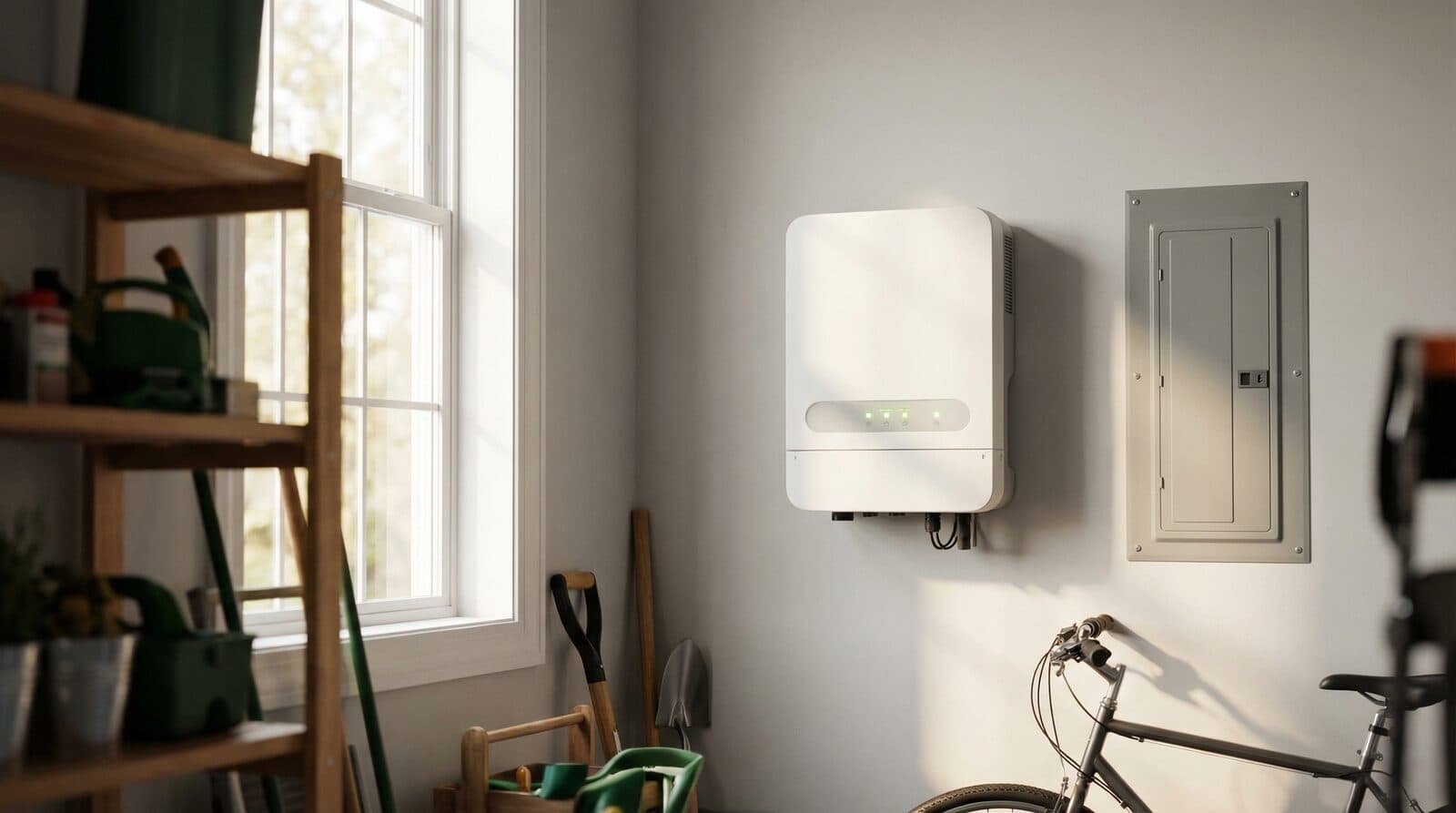
What Does a Solar Inverter Do?
A solar inverter converts the direct current (DC) electricity produced by your solar panels into alternating current (AC) that your home appliances use. Without an inverter, your solar panels are useless — you can't plug a fridge into a panel.
But the inverter does more than just convert power. It sets the electrical boundaries of your entire system: how many panels you can connect, what voltage and current it can handle, and how efficiently your system operates. Choosing the wrong inverter can result in lost energy, tripped safety limits, or even equipment damage.
Why compatibility matters
Types of Solar Inverters
There are four main types of solar inverters, each suited for different situations:
| Type | Best for | Pros | Cons |
|---|---|---|---|
| String inverter | Simple roofs, no shading | Lowest cost, high efficiency, easy maintenance | Entire string affected by one shaded panel |
| Microinverter | Complex roofs, partial shading | Panel-level optimization, long warranties (25 yr) | Higher cost per watt, more components on roof |
| Hybrid inverter | Battery storage systems | Manages solar + battery + grid in one unit | More expensive, more complex setup |
| Off-grid inverter | No grid connection | Full energy independence, battery-first design | Requires battery bank, no grid fallback |
For most residential installations with a clean, unshaded roof, a string inverter offers the best value. If you plan to add batteries later, start with a hybrid inverter. The compatibility checks in this guide apply to all types — voltage and current limits work the same way.
Compare on-grid, hybrid and off-grid inverters
Side-by-side differences, battery support, backup modes, and how to pick the right type.
Key Specs to Check on an Inverter Datasheet
Every inverter datasheet lists dozens of numbers, but only six matter for compatibility with your solar panels:
- Max DC voltage —the absolute maximum voltage the inverter can handle. Exceeding this can permanently damage the inverter. Your string's open-circuit voltage (Voc) on the coldest day must never exceed this value.
- MPPT voltage range —the voltage window where the inverter tracks maximum power. Your string's operating voltage (Vmpp) must stay within this range across all temperatures for efficient power extraction.
- Max input current (per MPPT) —the maximum operating current each MPPT tracker can accept. If your total string current exceeds this, the inverter will clip and waste energy.
- Max short-circuit current —the maximum fault current the input circuit can safely handle. Your total string Isc at hot temperatures must stay below this to avoid tripping protection or damaging components.
- Number of MPPT trackers —how many independent inputs the inverter has. Each MPPT tracker handles its own string or group of strings independently, useful for panels on different roof faces.
- Nominal AC power —the inverter's AC output rating. This determines your DC/AC ratio and how much clipping occurs at peak solar hours.
Where to find these specs
Voltage Compatibility: The Most Critical Check
Voltage is where most compatibility problems occur. Solar panels produce more voltage in cold weather (counterintuitive but true — it's physics). On the coldest day of the year, your string voltage peaks and must not exceed the inverter's limits.
Check 1: Maximum DC voltage (safety limit)
The string's open-circuit voltage at minimum temperature must stay below the inverter's absolute maximum DC voltage. This is a hard safety limit — exceeding it can destroy the inverter.
String Voc at cold temperature
Voc_cold = Voc_stc × panels × (1 + TcVoc/100 × (T_min − 25))Check your cold-weather string voltage
String Voc at cold
651.4V
Check 2: MPPT voltage range (efficiency window)
The string's operating voltage (Vmpp) must fall within the MPPT range across all temperatures. If Vmpp drops below the MPPT minimum on hot days, the inverter stops tracking efficiently. If Vmpp exceeds the MPPT maximum on cold days, you lose power.
String Vmpp at hot and cold
Vmpp_hot = Vmpp_stc × panels × (1 + TcVoc/100 × (T_cell_hot − 25))
Vmpp_cold = Vmpp_stc × panels × (1 + TcVoc/100 × (T_min − 25))
Temperature coefficients are negative for voltage
Current Compatibility: Don't Blow a Fuse
Current checks are simpler than voltage but still important. Solar panels produce more current in hot weather (opposite of voltage). If you connect multiple strings in parallel to one MPPT input, the currents add up.
Total string current at hot temperature
Isc_hot = Isc_stc × strings × (1 + TcIsc/100 × (T_cell_hot − 25))Compare this value against two inverter specs: the max input current (operational limit — exceeding it means clipping) and the max short-circuit current (safety limit — exceeding it means protection trips or damage).
Input current vs short-circuit current: the key difference
These two specs confuse many beginners, but the distinction is critical. Max input current (also called max operating current or Imax) is the highest continuous current the MPPT tracker is designed to process. If your panels' Impp exceeds this value, the inverter simply clips — it operates at its maximum current and ignores the excess. No damage occurs, just some energy loss during peak sun.
Max short-circuit current is a safety limit. If the combined Isc from your panels exceeds this rating, the inverter's input protection may trip or components could fail. This matters most when connecting multiple strings in parallel to one MPPT input. For example, the Deye SUN-8K-SG05LP1-EU has 2 MPPT trackers rated for 26A max input current and 34A max short-circuit current, with 2 string inputs per MPPT. A single string of 580W panels (Isc ≈ 17A) is well within the 26A limit. But if you parallel two such strings on one MPPT, the combined Isc reaches 34A — right at the max short-circuit current limit. On a hot day when current rises slightly due to the positive temperature coefficient, you could exceed it.
Per-MPPT limits
The DC/AC Ratio: Finding the Sweet Spot
The DC/AC ratio compares your total panel power (DC) to the inverter's AC output rating. This ratio determines how much 'oversizing' of the panel array relative to the inverter you have.
DC/AC ratio
DC/AC ratio = Total panel STC power (W) ÷ Inverter nominal AC power (W)A ratio of 1.0 means your panels and inverter are perfectly matched at STC — but since real-world conditions are rarely ideal, your inverter will be underutilized most of the time. A ratio of 1.2–1.3 is the sweet spot: the panels slightly exceed the inverter's capacity at peak, causing minor clipping during midday, but produce more total energy over the day.
Going above 1.5 means significant clipping losses — you're paying for panel capacity you can't use. Most inverter manufacturers void the warranty above 1.5. Going below 0.8 means the inverter is massively oversized and you're paying for capacity you don't need.
Clipping isn't always bad
Single vs Multi-MPPT: When It Matters
A single-MPPT inverter has one DC input that all strings share. A multi-MPPT inverter has two or more independent inputs, each optimizing its own group of strings separately.
If all your panels face the same direction with no shading, a single MPPT is fine — all panels produce similar voltage and current, and a single tracker can optimize them together. Multi-MPPT becomes important when strings experience different conditions.
Common scenarios where multi-MPPT helps: panels on two different roof faces (east and west), a tree that shades part of the array in the afternoon, or mixing panel orientations (portrait and landscape). Each MPPT tracker independently finds the optimal operating point for its strings, preventing a poorly performing string from dragging down a good one.
More MPPTs ≠ always better
Worked Example: Matching Panels to an Inverter
Let's check if 16 Canadian Solar CS6W-550MS panels are compatible with a Deye SUN-8K-SG05LP1-EU hybrid inverter in a climate with −10°C winter and +40°C summer.
Setup
Panel: Voc = 49.6V, Vmpp = 41.7V, Isc = 14.0A, TcVoc = −0.27%/°C, TcIsc = +0.05%/°C, Pmax = 550W. Inverter: Max DC voltage = 500V, MPPT range = 150–425V, max input current = 26A/MPPT, max short-circuit current = 34A/MPPT, nominal AC power = 8000W, 2 MPPT trackers × 2 strings each. Configuration: 8 panels per string, 1 string per MPPT.
Voltage checks
Voc_cold = 49.6 × 8 × (1 + (−0.27/100) × (−10 − 25)) = 396.8 × 1.0945 = 434.3V ✓ (< 500V max DC) but ⚠ (> 425V MPPT max)Vmpp_hot = 41.7 × 8 × (1 + (−0.27/100) × (65 − 25)) = 333.6 × 0.892 = 297.6V ✓ (> 150V MPPT min)Current check
Isc_hot = 14.0 × 1 × (1 + (0.05/100) × (65 − 25)) = 14.0 × 1.02 = 14.28A ✓ (< 26A per MPPT)DC/AC ratio
DC/AC = (550 × 16) ÷ 8000 = 8800 ÷ 8000 = 1.10 ✓ (within 0.8–1.5 range)Result
Compatible with caution (warning). The string Voc at −10°C (434.3V) stays below the 500V max DC limit ✓, but exceeds the 425V MPPT maximum ⚠ — the inverter can survive this voltage safely, but cannot track maximum power when Voc is above the MPPT window on cold mornings. The hot-weather Vmpp stays within the 150–425V MPPT range ✓. Current is well within the 26A per-MPPT limit ✓. The 1.10 DC/AC ratio is slightly conservative. To eliminate the warning, reduce to 7 panels per string or choose an inverter with a wider MPPT range.
Run this check automatically
Select your panels and inverter in our calculator — it runs all 8 compatibility checks instantly, including temperature corrections and production tolerance.
Step-by-Step: How to Choose Your Inverter
Follow these five steps to find the right inverter for your solar panel system:
- Calculate your total panel power
Multiply the number of panels by their Pmax rating. For example, 12 × 550W = 6600W (6.6 kW). This is your total DC array size.
- Choose an inverter size
Pick an inverter with a nominal AC power between 70% and 100% of your total panel power. For 6.6 kW of panels, look for inverters rated 5–7 kW. This gives a DC/AC ratio of 0.95–1.30.
- Check the voltage window
Calculate your string Voc at the coldest expected temperature. It must be below the inverter's max DC voltage. Calculate your string Vmpp at the hottest expected cell temperature. It must be above the MPPT minimum.
- Check the current limits
Calculate total Isc per MPPT input at the hottest temperature. It must be below the inverter's max input current and max short-circuit current ratings.
- Verify with the calculator
Enter your exact panel and inverter models, set your local temperature extremes, and let the calculator run all 8 checks. Fix any warnings or failures by adjusting the number of panels per string or choosing a different inverter.
Check compatibility now
Our free calculator checks voltage, current, MPPT range, and DC/AC ratio — with temperature corrections for your climate.
Common Mistakes When Choosing an Inverter
- Ignoring cold-weather voltage rise
Solar panels produce their highest voltage on cold, sunny mornings. If you size your string for 25°C (STC conditions), you may exceed the inverter's max DC voltage at −10°C or −20°C. Always calculate Voc at your region's coldest expected temperature.
- Oversizing the DC/AC ratio
A ratio above 1.5 means heavy clipping — you're paying for solar panels whose output the inverter can't use. Most manufacturers void warranty claims above 1.5. A ratio of 1.2–1.3 is ideal for most climates.
- Confusing per-MPPT and total current limits
An inverter with '60A max input current' and 2 MPPT trackers usually means 30A per tracker, not 60A per tracker. Read the datasheet carefully — the per-MPPT limit is what matters for your string configuration.
- Choosing the cheapest inverter without checking specs
A budget inverter with a narrow MPPT range (e.g., 250–450V) severely limits your string configuration. An inverter with a wider range (150–850V) gives you much more flexibility in how many panels you can connect per string.
- Forgetting to account for production tolerance
Panel manufacturing tolerance means your actual Voc could be up to 3% higher than the datasheet value. IEC 62548 requires including this tolerance in your maximum voltage calculation. A string that's 'just under' the limit at STC may be over the limit with tolerance applied.
Frequently Asked Questions
What size inverter do I need for a 5 kW solar system?
For a 5 kW (5000W) solar panel array, choose an inverter rated between 4 kW and 5 kW on the AC side. This gives a DC/AC ratio of 1.0–1.25, which is ideal for most climates. In very sunny locations, you can go as low as 3.5 kW (ratio of 1.43) to save cost, but expect some midday clipping.
Can my inverter be smaller than my solar panels?
Yes, and it usually should be. A DC/AC ratio of 1.1–1.3 (inverter smaller than panel array) is standard practice. This is because panels rarely produce their full STC rating in real conditions — temperature, dirt, and angle losses mean actual output is typically 80–90% of nameplate. Slightly oversizing panels relative to the inverter captures more energy during morning, evening, and cloudy periods.
What happens if I exceed the inverter's max DC voltage?
Exceeding the max DC voltage is dangerous. The inverter's input protection may trip, shutting down the system. In the worst case, it can cause an arc fault, damage the inverter's electronics, or void your warranty. This is why cold-weather voltage calculations are critical — it's the scenario where Voc is highest.
Do I need a hybrid inverter for batteries?
If you want battery storage, a hybrid inverter is the simplest option — it manages solar, battery, and grid in one unit. You can also pair a standard string inverter with a separate battery inverter (AC-coupled system), but this is less efficient and more expensive overall.
How many MPPT trackers do I need?
One MPPT tracker is enough if all panels face the same direction with no shading. Two MPPTs are recommended if panels span two roof faces or if partial shading is a concern. More than two MPPTs is useful for complex commercial installations with many orientations.
What is a good DC/AC ratio?
1.15 to 1.30 is the sweet spot for most residential systems. Below 1.0 means you're overpaying for inverter capacity. Above 1.5 means excessive clipping. The ideal ratio depends on your climate, electricity rates, and whether you value peak production or total annual energy.
Can I use a 3-phase inverter with a single-phase home?
No. A 3-phase inverter requires a 3-phase grid connection. If your home has single-phase power (most residential properties), you need a single-phase inverter. Check your electrical panel or ask your utility if you're unsure. Using the wrong phase configuration can damage equipment or violate electrical codes.
Can I use 17A panels on an inverter with 13A max input current?
Yes, but with energy loss. The inverter will clip the current to 13A during peak sun — you lose the excess power above what the MPPT can process. This is similar to having a DC/AC ratio above 1.0: you sacrifice a small amount of peak production in exchange for better morning/evening performance. However, check the max short-circuit current rating too — if the panel's Isc exceeds that limit, it becomes a safety issue, not just an efficiency issue.
Can I mix different wattage panels on the same inverter?
On separate MPPT inputs — yes, each MPPT tracker optimizes independently. On the same MPPT or in the same string — avoid it. Different wattages usually mean different Impp values, and in a series string, the lowest-current panel limits the entire string. If you must mix, put higher-current panels on one MPPT and lower-current panels on another.
My string voltage is 441V at STC and the inverter max is 500V — is this safe?
Probably not. The 441V is at STC (25°C cell temperature). On a cold winter morning at −15°C, that voltage rises to approximately 489V — dangerously close to the 500V limit. Add production tolerance (+3%) and you could hit 504V, which exceeds the limit. Always calculate Voc at your region's coldest expected temperature, not at STC. Use our calculator to check — it does this automatically.


Discussion
Sign in to join the discussion
We require a quick sign-in to keep this thread free of spam.
No comments yet. Be the first to share your experience.